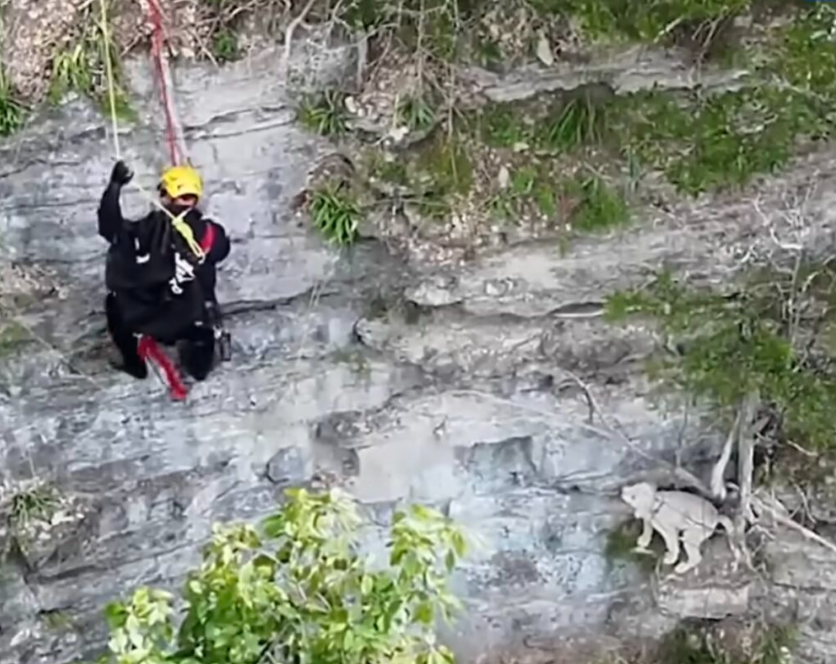
THE LITTLE BEAR WHO REFUSED TO GIVE UP: A RESCUE STORY THAT CHANGED EVERYONE WHO SAW HIM
In the quiet, untouched corners of the wild, where daylight filters through towering pines and the air carries the scent of earth and moss, life unfolds according to ancient rhythms. Mothers teach their young to climb, forage, listen, survive. Strength is learned. Fear is learned. And the bond between a mother and her cub is the difference between life and death.
That is why, on one cold morning, the sight of a lone bear cub dragging itself across the forest floor was as heartbreaking as it was unnatural.
He couldn’t have been more than a few months old — small, round-faced, his fur matted with dirt and blood. His tiny body trembled with every breath. One paw dangled uselessly beneath him, and the rest of him moved in slow, uneven motions, as though pain itself had wrapped around him like chains.
He was alone.
He was injured.
And he was losing the fight to survive.

A WORLD TOO BIG FOR ONE SMALL CUB
In the wild, even adults struggle when they are hurt. But a baby? A baby stands almost no chance at all.
Every sound made him flinch — snapping branches, distant calls, the rustle of leaves. Without his mother beside him, every shadow felt like a threat. The forest, once a playground of smells and discoveries, had become a maze of fear.
Hours passed. The cub dragged himself along the base of a fallen tree, whimpering softly. His stomach ached with hunger; his throat burned for water. Each time he tried to stand, his legs buckled.
But he kept moving — inch by inch, breath by breath — because instinct told him one truth:
If he stayed still, he would die.
And then, when his strength was nearly gone, something changed.
Voices.
Human voices.
At first he froze, unsure whether this new sound was danger too. But the footsteps were slow, careful… almost gentle. And soon, shadows appeared between the trees — not predators, but rescuers.

THE MOMENT EVERYTHING SHIFTED
The rescuers had been out searching for a different injured animal when they saw the cub slumped beside the fallen tree. At first, they thought he was already gone. His chest rose so shallowly they could barely see it.
But then one rescuer whispered, “He’s breathing.”
And that was all it took.
The team fell into motion — quiet, steady, urgent — speaking softly so as not to frighten him. The cub tried to crawl away, but his body gave out. Instead, he curled in on himself, trembling with exhaustion.
One rescuer slowly extended a hand, palm open, letting the cub sniff the air.
“It’s okay, little one,” he murmured. “We’re here to help you.”
No one knew it then, but that moment — that tiny cub taking one hesitant breath in the presence of humans — was the first step in a journey that would touch hearts across the world.

A RACE AGAINST TIME
They wrapped him in a thick, warm blanket. His body was frighteningly light, his bones sharp under his fur. Every few minutes he whimpered, a small, broken sound that made even the toughest rescuers swallow hard.
He had likely been injured for days.
He had likely been alone for even longer.
The team carried him to their vehicle and sped toward the nearest wildlife rehabilitation center. Every bump in the road made him flinch. But as the minutes passed, his breathing steadied — not from comfort, but from sheer exhaustion.
When they arrived, veterinarians were already waiting.

THE FIGHT FOR HIS LIFE
The exam revealed the truth no one wanted to hear:
A deep gash down his side, likely from a fall or predator attack. A fractured front paw. Dehydration. Severe malnutrition. An infection spreading through his tiny body.
The cub’s chance of survival was slim.
But the people caring for him refused to give up.
They cleaned his wounds.
They started IV fluids.
They treated the infection.
They whispered to him as they worked, telling him he was safe now, that he wasn’t alone anymore.
For hours he drifted in and out of consciousness. Sometimes his eyes opened — dark, glassy, confused — as though he wasn’t sure if he should trust the hands around him.
But slowly… very slowly… the trembling eased.
The tightness in his breathing softened.
And for the first time since he lost his mother, the cub slept without fear.
THE DAYS THAT FOLLOWED
Healing was not simple.
For days he remained too weak to stand. Rescuers took turns sitting beside him, touching his nose gently with their fingers, encouraging him to fight. They fed him with a syringe when he was too tired to eat. They lifted his tiny head so he could drink. They monitored his fever through long nights.
Little by little, something precious returned:
Strength.
He began to look around with curiosity instead of panic.
He leaned into the hands that stroked his fur.
He took his first unsteady steps across the blankets.
And one morning, he let out a tiny huff of a sound — the closest thing to a cub’s thank-you.
The entire team celebrated.

REHAB, REGROWTH, AND HOPE
Weeks passed, and the cub’s transformation astonished everyone.
His wound healed.
His fractures mended.
His energy returned in bursts — playful, clumsy, full of life.
He learned to climb small logs again.
He learned to paw at enrichment toys.
He began to eat with enthusiasm, sometimes making a mess that left the rescuers smiling despite themselves.
He was still too young to survive alone, and because no mother was found, he would remain under human care for many months. But for the first time since he was found, his future no longer looked like a fading ember.
It looked like hope.
THE CUB WHO REMINDED THE WORLD TO CARE
Every rescue tells two stories:
The story of an animal who refused to give up.
And the story of the humans who refused to let it die.
This little bear’s journey — from injured, trembling orphan to a thriving young cub — became a reminder of everything wild creatures face when they lose their families, their strength, their safety.
But it also became something more:
A symbol of what compassion can do.
One cub survived because a group of strangers cared enough to step forward.
One life continued because people refused to walk away.
One story spread because the world still needs reminders of kindness.
In the vastness of the wild, life is fragile.
But so is hope — unless someone chooses to protect it.
This little cub lived because hope showed up in the forest that day.
And his journey is far from over.
The Thirsty Leopard and the Pot of Trouble
A Morning Like No Other
In a quiet village in India, the dawn of a seemingly ordinary day quickly gave way to chaos, curiosity, and concern. Residents were roused from their morning routines by a commotion unlike any they had witnessed before — a leopard had wandered into the settlement. Initial panic and confusion rippled through the narrow streets as villagers tried to understand the unusual visitor. But as they approached, they discovered something both startling and strangely amusing: the young leopard had its head stuck inside a metal pot.
The animal, a male estimated to be about three years old, had descended from nearby forested hills in search of water. Seasonal droughts had left many natural sources dry, and the pot — used by the villagers to collect rainwater — seemed like a promising solution. Yet in its desperation, the leopard became trapped, its powerful jaws and muscular neck wedged firmly inside the container. What began as a quest for survival quickly transformed into a spectacle that drew villagers from every corner of the area.
The sight was at once alarming and surreal. Shining metal obscured the leopard’s face as it staggered down narrow lanes, pawing, twisting, and vocalizing in frustration. Its roars, a mix of fear and frustration, echoed through the village, unnerving some onlookers while amusing others. Some villagers attempted to approach, but caution prevailed — the wild predator was unpredictable, and safety had to come first.

The Delicate Art of Rescue
The local Forest Department was alerted promptly, and a team of experienced wildlife officers, led by District Forest Officer Kapil Sharma, was dispatched. They faced a situation that required extreme care. Any sudden movement or misjudgment could startle the already frightened leopard, putting both the animal and human onlookers at risk.
Tranquilization was chosen as the safest approach. From a secure distance, the officers administered a sedative, allowing them to wait while the young leopard gradually succumbed to its effects. Once the animal lay still, the rescue team moved in with a combination of veterinary expertise and caution. Using specialized tools, they carefully loosened the rim of the pot without causing injury to the animal.
After several tense minutes, the metallic obstacle was finally removed with a soft clang, freeing the leopard’s head. The veterinarians quickly assessed its condition: the leopard was unharmed but clearly exhausted from the ordeal. Its breathing and pulse were stable, and there were no visible injuries, allowing the team to prepare it for temporary transport and further observation.

Back to the Wild
After regaining consciousness, the young leopard was carefully placed in a transport cage and taken for examination. Based on markings and location, officials determined that the animal was likely from the nearby Kumbhalgarh Wildlife Sanctuary, approximately twenty kilometers away. Following a thorough health assessment, the leopard was deemed fit for release.
Later that evening, the team returned the leopard to the forest. As the gate swung open, the animal bolted into the trees with remarkable speed and agility, disappearing into its natural habitat. For the villagers, the drama ended in relief and celebration. The rescue had been successful, the animal unharmed, and the balance between human settlement and wildlife restored, at least temporarily.

Leopard Behavior and the Science of Curiosity
Leopards are solitary, highly adaptable predators known for their intelligence, stealth, and opportunistic behavior. Typically elusive, they can cover significant distances in search of food or water, especially during periods of drought or habitat disruption. Scientists note that young males, in particular, often venture into unfamiliar territories when exploring, hunting, or dispersing from natal ranges.
The behavior of this leopard, although unusual in a village context, aligns with natural patterns of resource-seeking and problem-solving. In the wild, leopards investigate potential food or water sources with a combination of caution and curiosity. In this case, the metal pot became an unexpected obstacle, highlighting the interplay between animal instinct and human-modified environments.
Veterinarians and wildlife experts emphasize that young animals, particularly males, are prone to taking risks as part of learning and survival strategies. Encounters like this one offer researchers valuable insights into how wildlife interacts with human settlements and modified landscapes, information that is increasingly relevant in a world where natural habitats are under pressure.

Cultural Significance of Leopards in India
Leopards hold a prominent place in Indian culture and mythology. Traditionally, they are seen as symbols of power, agility, and keen perception. In folklore, leopards are often depicted as clever and elusive creatures, capable of navigating both forested landscapes and human-influenced territories. While encounters between leopards and humans are not uncommon, stories like this one — where the predator is humbled in an unexpected and humorous way — resonate with people for both entertainment and moral reflection.
Such narratives also encourage a broader conversation about coexistence. Villagers, officials, and observers alike are reminded that wildlife is not merely a backdrop to human life but an integral part of shared ecosystems. By witnessing the leopard’s plight and rescue, the community was offered an opportunity to reflect on empathy, caution, and respect for nature.
Lessons in Coexistence and Safety
Human-wildlife interactions are becoming increasingly frequent as settlements expand into formerly wild areas. This story illustrates both the risks and rewards of responsible coexistence. The villagers’ cautious approach, combined with the Forest Department’s professional intervention, ensured a safe outcome for both people and animal.
From a conservation perspective, the incident underscores the importance of understanding wildlife behavior and designing human settlements with these considerations in mind. Securing water sources, avoiding unattended food, and maintaining open communication with wildlife authorities can reduce conflicts while allowing animals to continue their natural patterns with minimal risk.
Moreover, the rescue highlights the skill, patience, and careful planning required to handle such situations. The combination of tranquilization, careful extraction, and veterinary monitoring ensured the leopard’s health was preserved, demonstrating a model approach for similar cases globally.

The Viral Moment and Global Attention
The images and videos of the leopard, head stuck in a pot, quickly circulated online, captivating audiences worldwide. Many were amused by the animal’s predicament, while others reflected on the serious message behind the humor: the impact of habitat encroachment, the importance of water conservation, and the need for coexistence strategies.
Social media engagement also played a role in raising awareness. By sharing the story, users helped highlight the work of forest officers and veterinarians, showing that timely and informed action can prevent accidents from turning tragic. The leopard’s ordeal became both an educational case study and a lighthearted reminder of nature’s unpredictability.
Reflections on Human Curiosity and Wildlife Awareness
This unusual encounter between humans and a wild leopard serves as more than entertainment. It invites reflection on how curiosity — both human and animal — shapes our experiences and responsibilities. The leopard’s inquisitiveness led it to a risky situation, while the villagers’ caution and the rescuers’ expertise ensured a positive resolution.
As humans continue to interact with wildlife, moments like this emphasize the importance of observation, respect, and preparedness. They remind us that curiosity and empathy must go hand in hand, particularly as human expansion continues to intersect with natural habitats.
At its core, the story highlights the delicate balance between human settlements and the wild spaces that surround them. It celebrates the intelligence and adaptability of the leopard while acknowledging the vital role humans play in facilitating safe, ethical encounters.
Conclusion: Humor, Awareness, and Coexistence
The leopard’s adventure — trapped, humbled, yet ultimately safe — captures the complex dynamics of human-animal coexistence. It is a tale of curiosity, risk, resilience, and learning. The villagers experienced a range of emotions from fear to amusement, the rescuers demonstrated professionalism and care, and the leopard returned to the forest wiser and unharmed.
Stories like this encourage global audiences to appreciate wildlife not only for its beauty or danger but for its intelligence, problem-solving abilities, and the lessons it offers humans about coexistence, compassion, and environmental stewardship. Through humor and reflection, the incident became a teaching moment, illustrating that even in moments of unexpected chaos, understanding, patience, and empathy can bridge the gap between species.